521
- Format
- 16mm
- Introduced
- Not known
Serial numbers
No table of its own. The September 1977 bulletin numbers the H, B, C, D and L cameras in one series, so a number from this one can still be dated. Look up a serial
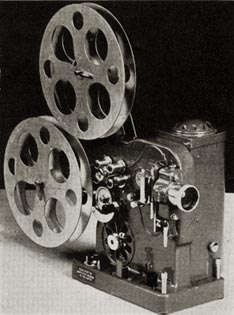
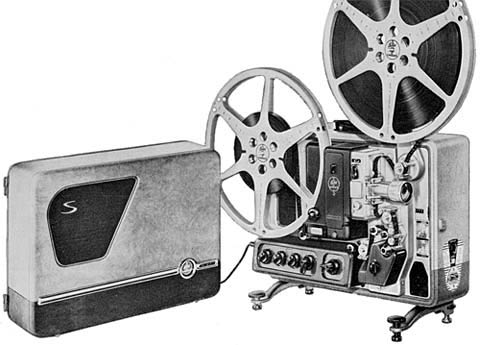
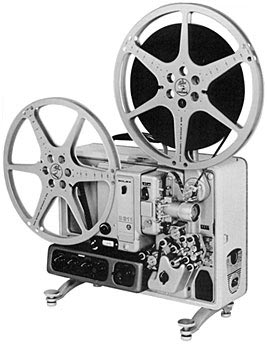
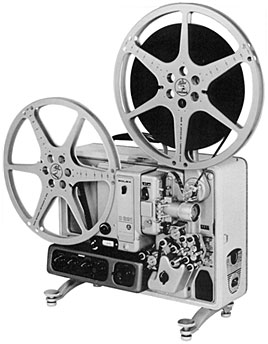
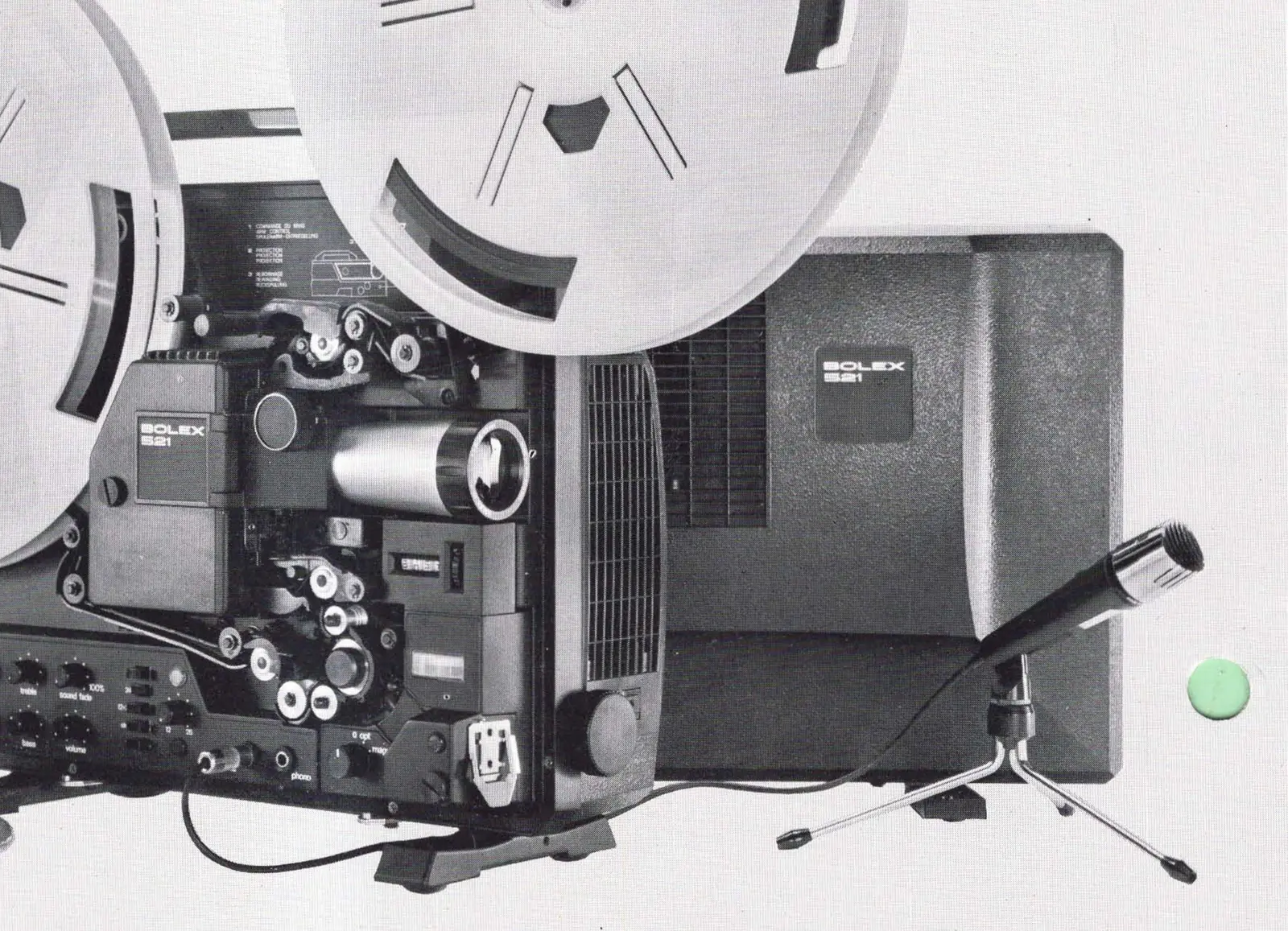
A 16mm sound projector that records as well as plays, and the most serious projector Bolex made. It takes any 16mm film, single or double perforated, silent or with an optical or a magnetic track, and will record on the magnetic stripe with direct mixing, superimposition and sound fading. Spools to 2000ft, automatic threading, a low-voltage motor under electronic regulation, and speeds of 18 and 24 with anything from 12 to 26 on a potentiometer, plus freezing on a frame and single-frame projection. The amplifier is fully transistorised in three plug-in units, 25W at 2 per cent distortion into 8 ohms, with a 3W monitor speaker in the body and a 10W one in the lid. Recording level is set on separate microphone and phono potentiometers and watched on a lit VU meter, with threshold compression, a variable-erasure control for dissolves, and a double lock so nothing is erased by accident. Magnetic response 100 to 12,000 cycles at 24 f.p.s., optical 50 to 7,000, wow under 0.3 per cent. A 24V 250W halogen lamp with a dichroic mirror and a choice of three lenses, 50mm f/1.3, 70mm f/1.6 or the 35-65mm f/1.6 zoom. Die-cast aluminium with a plastic lid that forms its case, 480 by 380 by 240mm, about 40lb. $3,727.00 in January 1978.
Source: Added since. Michael Tisdale never covered this model; it was researched for this edition. Photographs: 16mm Bolex: the H16 range brochure, Bolex (U.S.A.) Inc..
- The Bolex H16 range, Bolex International brochure: Bolex International's own range brochure, whose last pages describe the 16mm projectors. The source of every specification here. Undated. Scanned by Pacific Rim Camera. Its OCR interleaves the columns and misreads the model names, turning 501 into 507 and running factory codes into headings, so the models and their descriptions were read off the rendered page.
Something wrong, or something to add? Tell us