SP 80
- Format
- Super 8
- Introduced
- 1973
Serial numbers
Bolex published no serial table for the Super 8 cameras and projectors. The September 1977 bulletin numbers the Swiss-built H, B, C, D and L machines only, and these were built by Eumig and by Chinon.
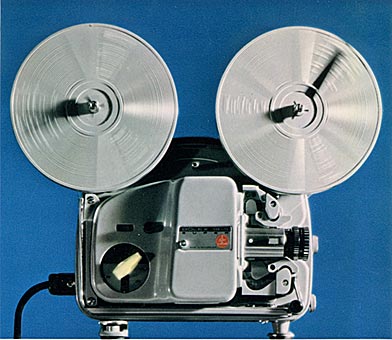
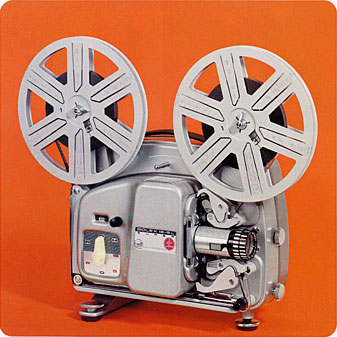
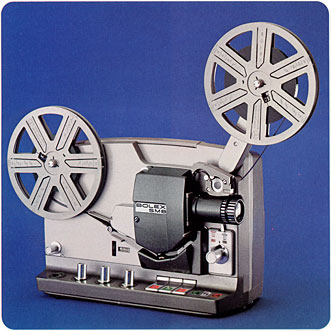
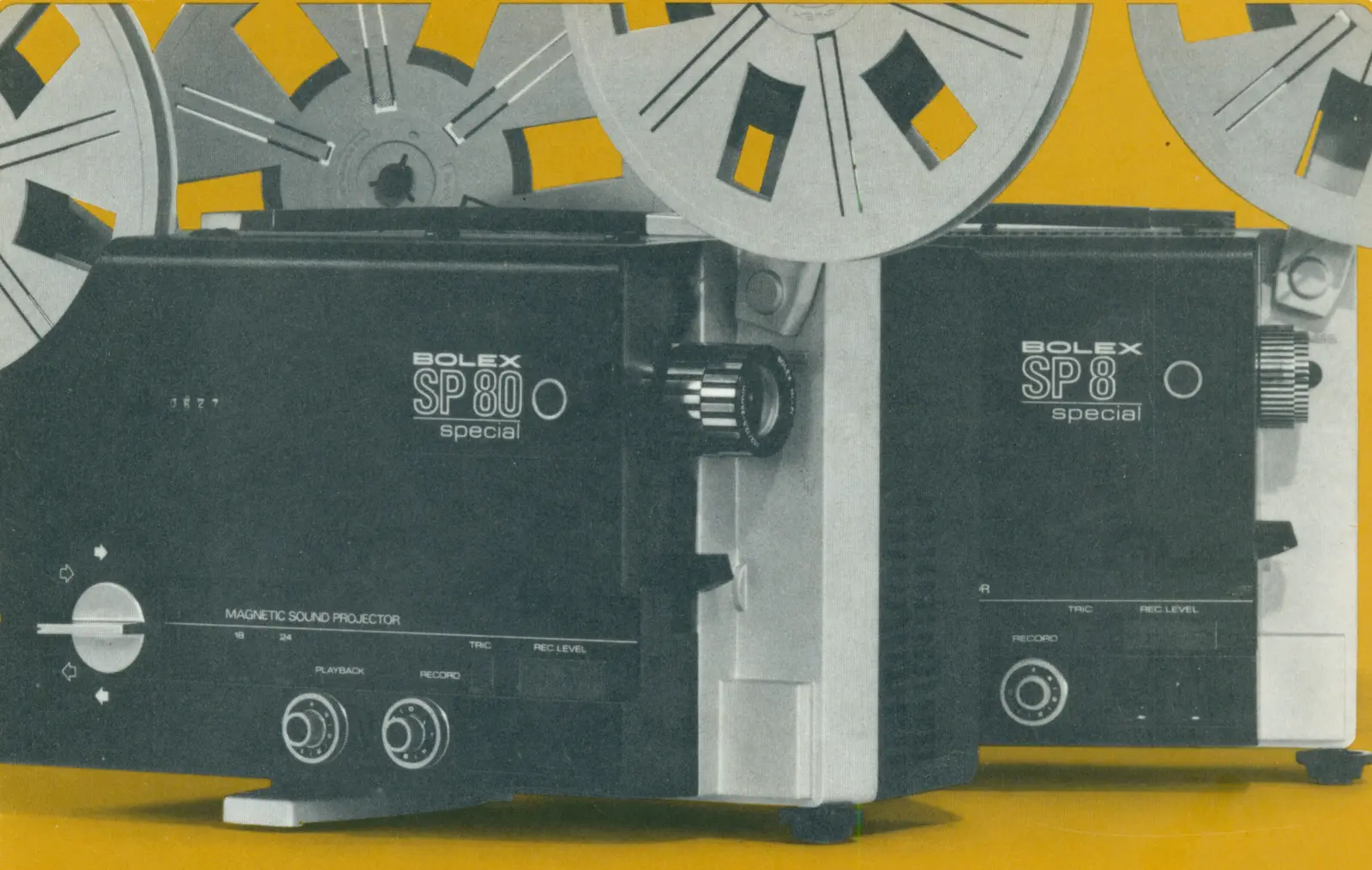
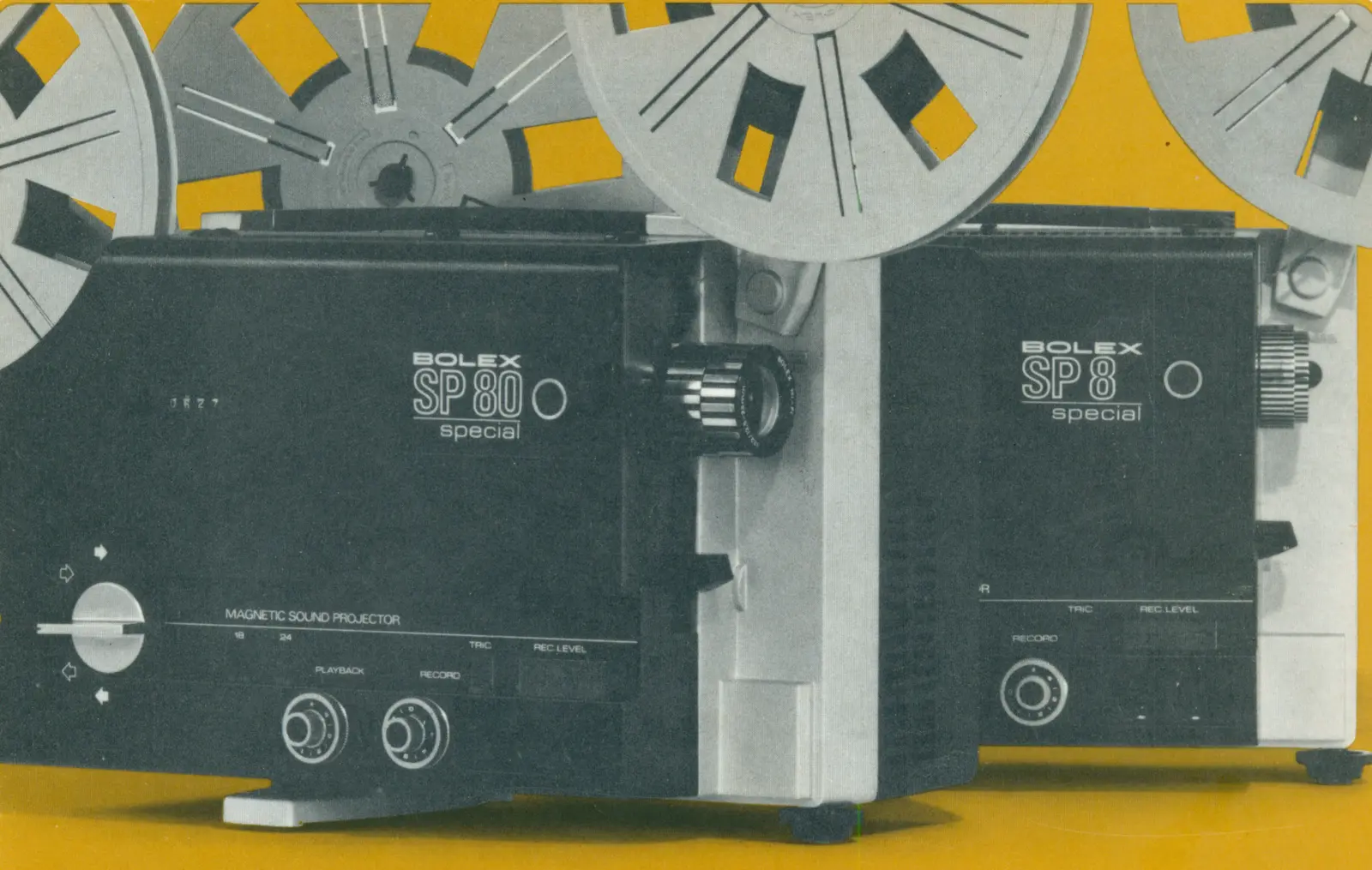
A Super 8 and Single-8 projector with magnetic sound it can both record and play back, with automatic threading, forward and reverse running, 18 and 24 frames a second and 600ft reels. From after Eumig acquired Bolex in 1969, and built on Eumig's own mechanism rather than a Sainte-Croix design. A variant was sold as the SP 80 Special, and Bolex's own booklet for it says the SP 80 special and SP 8 special are practically identical, differing mainly in amplifier power: 10W sinusoidal against the SP 8 special's 6W.
Source: Added since. Michael Tisdale never covered this model; it was researched for this edition. Photographs: Bolex SP 80 and SP 8 spécial instructions for use, Bolex International S.A..
- Bolex SP 80 special and SP 8 special, instruction booklet: A Bolex document for this family at last, where this file long said one was wanted. It covers the two Special variants together and opens by saying they are "practically identical, except for a few details", which is Bolex settling in its own words that the SP 8 and SP 80 are one design. One of the few details is power: the booklet gives the SP 80 special 10W sinusoidal and 15W musical against the SP 8 special's 6W and 8W. Both are supplied with a Bolex Hi-Fi zoom, a 12V 100W halogen lamp with a dichroic mirror and a 400ft reel, and both are for silent and magnetic sound Super 8. Response 75 to 10,000 cycles at 18 f.p.s., signal to noise 45dB, wow under 0.4 per cent, footage counter reading one unit to 18 frames. It describes the Special variants rather than the plain models, so it is evidence about the family and not a datasheet for either base machine. Scanned by Pacific Rim Camera.
- Dealer and collector listings, read November 2026: Everything above comes from people selling or restoring the machine, not from Paillard or Eumig. They agree on the format, the sound, the speeds and the reel size, and date it to 1973 to 1975. They disagree on which Eumig chassis underlies it, the 700 or the 800 series, so this entry does not say. A Bolex booklet for the Special variants has since been read and is cited above; it does not date the machine or settle the chassis question, so those still rest on the listings.
- Eumig acquired Bolex in 1969: Which is the context for a Bolex-badged projector built on an Austrian mechanism.
Something wrong, or something to add? Tell us